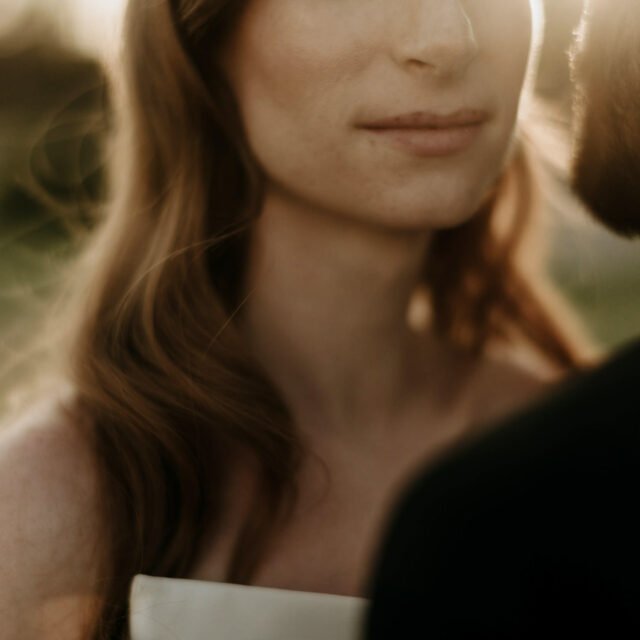

There are couples who discover too late what a wedding planner really does.
They discover it when a vendor does not answer. When the schedule starts falling apart. When the family begins to give opinions on every detail. When the budget starts opening up in every direction. When, on the wedding day, someone asks who is receiving the flowers, who is seating the guests, who is checking the setup, who is talking to the DJ, who is approving a last-minute change, or who is handling an unexpected rainstorm.
And that is when the truth appears: a wedding is not organized with excitement alone.
Excitement is the starting point. It is necessary. It is beautiful. But a wedding that is truly well lived needs structure, judgment, experience, communication, and someone capable of taking care of everything that happens before, during, and after the celebration.
That is what a wedding planner does.
It is not only about “helping organize.” That phrase falls short. A professional wedding planner can completely transform the way a wedding is experienced, because they turn a collection of decisions, vendors, emotions, schedules, and expectations into one coherent experience. And when that happens, the couple can do something that sounds obvious, but many couples never truly manage to do: live their day with presence.
What a wedding planner really does
A wedding planner is the person or team in charge of planning, organizing, coordinating, and accompanying the complete wedding process.
Their work begins long before the event. They help ground the couple’s vision, define priorities, organize the budget, search for vendors, review proposals, build timelines, coordinate meetings, anticipate problems, and create a clear path so the wedding does not depend on chaos or improvisation.
But their value is not only in making lists.
A good wedding planner understands how a wedding moves in real life. They know that setup times rarely forgive delays. That vendors need clear information. That relatives can complicate simple decisions. That a beautiful venue may have difficult restrictions. That an outdoor ceremony needs a backup plan. That a twenty-minute delay can affect food service, the light for photos, and the start of the party.
That is why their work matters so much.
A wedding planner is not there to take personality away from the wedding. They are there to make it possible for that personality to happen without the couple having to carry everything.
The difference between planning a wedding and surviving the planning
Many couples begin with enthusiasm.
They open inspiration folders, save photos, imagine flowers, dresses, tables, music, and locations. At first, everything feels exciting. But little by little, the difficult questions begin to appear.
How much does it really cost?
Who should be booked first?
What happens if the venue does not include furniture?
How much time is needed for setup?
Who coordinates the ceremony?
How is the itinerary built?
Which vendor is the right fit?
Which contract protects the couple better?
What happens if it rains?
Who checks that everything is ready on the wedding day?
Planning a wedding without professional support can become exhausting, especially when the couple has work, family, commitments, and a full life outside the organization of the event.
That is where a wedding planner changes the experience.
Because they help move the couple from anxiety to clarity. From “we do not know where to start” to “this is what comes next.” From disorganized emotion to a process with direction.
The difference is not only that the wedding looks beautiful. It is also how the path toward it is experienced.
The wedding planner as a filter for decisions
A wedding is full of decisions.
Some are big: destination, venue, budget, number of guests, style, menu, photography, music. Others seem small, but also matter: schedules, colors, transportation, table layout, entrance timing, number of servers, lighting, permits, trials, rehearsals, payments, tips, setup, teardown.
Without guidance, a couple can feel trapped in hundreds of micro-decisions.
A wedding planner helps filter. They help decide what matters and what does not. They help understand where it makes sense to invest more and where things can be simplified. They help distinguish between a visual whim and a decision that truly improves the experience.
This is especially important because a wedding should not become a competition to have more things. More flowers. More stations. More details. More vendors. More moments. More decoration.
A well-planned wedding does not necessarily have more. It has better intention.
And a professional wedding planner can help make every decision make sense within one complete idea.
Budget management: one of their most important functions
One of the biggest reasons to hire a wedding planner is the budget.
Many couples believe that hiring one will be an additional expense. But in many cases, a wedding planner can help avoid far more expensive mistakes.
A wedding budget can easily get out of control. Not always because of great luxuries, but because of details that were not anticipated: additional transportation, furniture not included, overtime fees, permits, trials, special setups, corkage fees, power generators, extra staff, vendor lodging, taxes, tips, or last-minute changes.
A wedding planner helps the couple see the full map.
They can guide the couple on realistic cost ranges, investment priorities, vendors that match their style, and budget categories that should be considered from the beginning.
This does not mean deciding for the couple. It means giving them better information so they can decide better.
And in a wedding, that can make an enormous difference.
Vendors: choosing well is also part of the art
A wedding depends on many people.
Photography, video, venue, catering, flowers, music, makeup, hair, lighting, furniture, cake, transportation, lodging, stationery, setup, religious or civil coordination, among others.
Each vendor can contribute a great deal. But each one can also become a problem if there is no clarity, experience, or proper communication.
A professional wedding planner knows how to evaluate vendors. They know what questions to ask, what to review in a proposal, what should be put in writing, and what signs may indicate risk.
They also help vendors work as a team instead of isolated pieces. This is key. A wedding does not work well if every vendor operates on their own. Photography needs to know schedules and light. Catering needs clear timing. Music needs to know entrances and key moments. Decoration needs to coordinate with setup and lighting. The venue needs precise information.
When all of that is articulated well, the wedding flows.
When it is not, the problems appear exactly when they should appear least: on the wedding day.
The wedding day: when the wedding planner becomes indispensable
The wedding day should not be a day for the couple to solve problems.
That day, the couple should wake up, get ready, feel moved, embrace, look, breathe, get married, celebrate, and live. It sounds simple, but for that to happen, someone else has to be holding the operation.
The wedding planner coordinates times, vendors, setups, entrances, ceremonies, transfers, adjustments, and emergencies. They check that everything is where it should be. They answer questions. They solve unexpected issues. They protect the itinerary. They make sure the couple does not have to find out about every small problem.
Because something always happens.
A flower delivery arrives late. A vendor needs direction. A guest gets lost. A table needs adjustment. The weather changes. A song is not ready. Someone needs to confirm a payment. A relative asks a question. A microphone fails. The wind moves the decoration.
When there is a wedding planner, those details do not reach the couple like a storm.
They are solved before they become part of the memory.
Wedding planner, coordinator, and wedding designer: they are not the same
It is common for these roles to be confused.
A wedding planner is in charge of the full planning of the wedding. They accompany the process months before the event and help build the entire structure of the celebration.
A wedding coordinator usually focuses more on the execution of the day or the weeks close to the event. Their work is essential, but it does not necessarily include all the previous planning.
A wedding designer or creative director works mainly on the aesthetic and conceptual side: atmosphere, palette, furniture, flowers, textures, lighting, and visual experience.
In some companies or teams, these functions may be integrated. In other cases, they are handled by different people. What matters is for the couple to understand exactly what they are hiring.
Because having someone coordinate the wedding day is not the same as having someone accompany the entire process from the beginning. And having beautiful decoration is not the same as having full creative direction.
Each role contributes something different. And when they are well integrated, the wedding feels much more solid.
Why their role is even more important in a destination wedding
In a destination wedding, the role of the wedding planner becomes even more important.
When the wedding takes place outside the couple’s city, additional layers of logistics appear: lodging, transfers, flights, schedules, local vendors, permits, weather, arrival times, guest experiences, remote communication, and coordination with the venue.
A destination wedding can be beautiful. But it can also become very complicated if no one knows the territory.
A wedding planner with experience in destination weddings helps anticipate what the couple may not see from afar. They can guide the couple on seasons, access, venue restrictions, reliable vendors, real transfer times, and specific needs of the destination.
This applies to a beach in Los Cabos, a hacienda in Yucatán, a Magical Town, a vineyard, a private villa, or a resort in the Riviera Maya.
In every case, the wedding should not only look good. It should work well.
And for that, someone needs to understand the destination beyond the beautiful photos.
How a wedding planner also helps photography
Although many couples do not think about it at first, a good wedding planner can influence the photos tremendously.
Not because they take the camera, but because they help the right conditions exist.
Good planning considers the light of the ceremony, the time needed for portraits, transfers between locations, the order of getting ready, family moments, the reception entrance, the first dance schedule, and dinner lighting.
All of that directly affects photography.
When the timeline is poorly built, the photos suffer. When the ceremony happens under harsh light, it shows. When there is no time for portraits, it shows. When the setup is not ready before guests arrive, it shows. When there is no coordination between video, photo, planner, and venue, it shows.
That is why the best results usually appear when the team works in alignment.
At AVMF, professional planning is deeply valued because it allows the visual side of the wedding to breathe better. A well-coordinated wedding creates space to capture emotion, details, atmosphere, and real moments without constantly fighting against disorder.
When it is best to hire a wedding planner
The simplest answer is: as early as possible.
Especially if the wedding will be large, destination-based, luxury-oriented, intimate with a high level of detail, or held in a place with complex logistics.
Hiring a wedding planner from the beginning allows the couple to make better decisions from the foundation: budget, venue, date, style, vendors, and overall experience. If they are hired too late, they can still help, but some poor decisions may already be difficult to correct.
It is also wise to hire one when:
• The couple does not have enough time to coordinate everything
• The wedding will take place in another city or country
• The venue requires a lot of external production
• Many vendors are involved
• The couple wants a highly curated experience
• The couple wants to avoid family tension or improvised decisions
• The wedding includes several days of activities
A wedding planner is not a luxury reserved only for enormous weddings. They can be a very smart investment even in intimate weddings, precisely because in smaller formats every detail is more visible.
What a couple should look for in a good wedding planner
Not all wedding planners work the same way.
Before hiring one, it is important to look beyond a beautiful social media profile. It is worth understanding their experience, communication style, organizational ability, vendor network, aesthetic sensitivity, and way of handling pressure.
A good wedding planner should inspire trust.
They should listen, organize, guide, and tell the truth when necessary. They are not there to approve every idea without a filter, but to help make the wedding possible, beautiful, and coherent.
Some useful questions before hiring are:
• What exactly does the service include?
• Do they offer full planning or only coordination?
• Do they have experience with the kind of wedding being imagined?
• How do they handle vendors and contracts?
• How do they build the timeline of the day?
• What happens if there are changes or unexpected issues?
• How many weddings do they take at the same time?
• How do they communicate with the couple during the process?
The relationship with the wedding planner will be long and close. That is why good taste is not enough. There has to be real trust.
A better wedding begins with more human planning
In the end, the wedding planner is not there to take emotion away from the wedding.
They are there to protect it.
So the couple does not arrive exhausted on the most important day. So decisions do not become an impossible burden. So vendors work in coordination. So the budget makes sense. So guests feel cared for. So the event does not depend on luck.
A well-planned wedding can be felt.
In the timing.
In the calm of the couple.
In the way the ceremony flows.
In the comfort of the guests.
In the beauty of the setup.
In the photography.
In the party.
In the memory.
And when a wedding planner does their job well, one of the best things that can happen is that almost no one notices everything they solved.
Only one thing is noticed: the wedding flowed.
Why Choose Us?
At AVMF, it is understood that a well-crafted wedding is the result of many visions working together.
Planning, coordination, design, logistics, the venue, photography, video, music, flowers, and every vendor play a different role within the experience. That is why the work of professional wedding planners is deeply valued: when a wedding is well planned, everything flows better, moments breathe more naturally, and the visual story can be told with much greater strength.
AVMF’s specialty is wedding photography and video. From that place, the team contributes vision, sensitivity, experience, and visual judgment. But there is also a strong understanding of how to integrate into the rhythm of a complete production, work hand in hand with planners and coordinators, respect the timeline, anticipate important moments, and move with discretion so the celebration can preserve its real energy.
That experience working alongside planning teams makes it clear that a wedding is not documented in isolation from everything happening around it. Light, timing, transfers, setup, the ceremony entrance, family portraits, the reception, and the party all depend on precise coordination. When all of that is carefully handled, the images gain depth too.
If you are planning your wedding and want a photography and video team that knows how to work professionally within a well-organized production, AVMF will be honored to accompany you.
Because a well-planned wedding is lived better.
And when it is lived better, it is remembered better too.