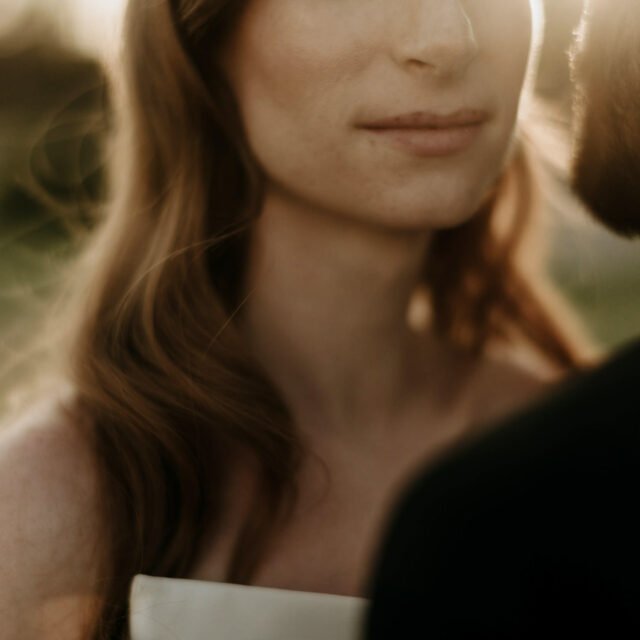

When you receive your wedding photographs, the first thing you will probably do is open the digital gallery.
You look through it on your phone. You share it with your family. You save some favorites. You post others. You return again and again to the images that move you the most.
And for a while, that feels like enough.
But years pass.
You change phones. You change computers. One folder ends up inside another folder. The gallery you once opened every week becomes something you visit once a year. Some photographs survive on social media. Others remain stored on a hard drive no one reconnects.
Then a question appears that seems simple, but actually has a lot to do with the way we preserve memories:
Is it better to have a physical album or a digital wedding gallery?
The answer should not be treated as a competition.
They serve different purposes.
The digital gallery allows you to preserve, share, and access hundreds of images. The album transforms a selection of those photographs into a physical object that can remain within the family for decades.
One offers breadth.
The other offers permanence.
The digital gallery preserves the complete story
One of the greatest advantages of digital photography is the possibility of delivering a much broader story.
A wedding can produce hundreds of photographs: getting ready, details, ceremony, portraits, family, guests, speeches, dinner, first dance, and party.
A physical album could never contain all of them without becoming enormous.
A digital gallery can.
It allows you to revisit the wedding almost from beginning to end and return to small moments that might never make it into a printed selection.
It is also very easy to share.
Family members who live in other countries can see the photographs. Guests can find images where they appear. The couple can download them to different devices and select their favorites over time.
That is why the digital gallery is essential.
It should not disappear.
The mistake is assuming that because the photographs exist digitally, they are automatically protected forever.
Digital feels permanent, but it is not always permanent
We live surrounded by files.
Thousands of photographs on our phones. Folders on computers. Cloud storage. External drives. Links. Apps.
That creates a sense of security.
But formats change.
Devices fail. Hard drives can become damaged. Passwords are forgotten. Digital services change their terms. A computer we use every day today may end up stored in a closet ten years from now.
That is why, after receiving a gallery, it is worth downloading it and preserving it in more than one place.
A good practice may include:
• One copy on your computer
• One copy on external storage
• One copy in the cloud
• A physical album with a selection of the most important images
It is not about distrusting technology.
It is about understanding that important memories deserve more than one form of preservation.
An album is not simply a collection of printed photographs
A good wedding album has something that a screen can hardly reproduce.
Rhythm.
One page prepares the next. One photograph can take up an entire spread. Another can appear beside smaller details. The ceremony can unfold slowly while the party speeds up visually.
The album can tell a story.
It does not need to show everything that happened.
It needs to show enough for the memory to return.
That is one of the great differences between printing individual photographs and building an album.
An album has editing.
There is a conscious selection of images. A sequence. Pauses. Changes of scale. Relationships between photographs.
When it is well designed, it does not function like an archive.
It functions like a narrative.
Some photographs gain value over time
On the wedding day, it is natural for the couple to focus first on their portraits.
The dress. The ceremony. The first kiss. The couple session. The first dance.
Those images matter.
But with time, other photographs begin to carry a different kind of weight.
A mother adjusting the dress.
A father waiting before the ceremony.
Grandparents sitting together.
A group of friends who, years later, may live in different cities.
A glance that happened while the couple was busy somewhere else.
These may not be the first photographs someone posts on Instagram.
But they can become the most important twenty years later.
That is why selecting photographs for an album is not only about choosing the “most beautiful” images.
It is about thinking about which ones will help reconstruct the story after a great deal of time has passed.
An album forces us to slow down
A digital gallery is often consumed quickly.
We swipe.
We move from one photograph to another. We zoom in. We go back. We close the screen.
A physical album creates a different relationship with the images.
You have to open it.
Sit down.
Turn the pages.
Pause.
It can rest on a table while someone asks about the wedding. It can appear during a family gathering. Children may discover it years later. Parents may have their own copy.
The photograph no longer depends on a screen in order to exist.
It becomes an object.
And family objects have a strange ability to cross generations.
So should we choose an album instead of a gallery?
No.
The best answer is usually to have both.
The digital gallery preserves the breadth of the story.
The album preserves a carefully selected version of that story.
One allows you to return to hundreds of photographs.
The other gathers the ones you will probably never want to lose.
Thinking about it this way changes the question.
It is no longer:
“Physical album or digital gallery?”
It becomes:
“How do we want to preserve our wedding?”
How to choose the photographs for an album
Choosing can feel difficult when you have hundreds of images you love.
The key is not to think of the album as a collection of individual favorites.
Think in terms of story.
A balanced selection should include:
• Preparations
• Meaningful details
• Family and important people
• Ceremony
• Couple portraits
• Guests
• Speeches and emotions
• Reception
• First dance
• Party
• Closing images
It also helps to mix large photographs with smaller moments.
Not everything needs to be spectacular.
Sometimes an apparently simple image allows the next photograph to carry more weight.
The album needs to breathe.
The design matters too
Not every album ages in the same way.
Trends that are too specific can make a design feel dated quickly. Excessive typography, decorative graphics, or crowded layouts can compete with the photographs.
In many cases, a clean and simple design ages better.
The photographs should remain the protagonists.
Print quality, paper, binding, and materials also matter.
An album meant to last for decades should be produced as an object that can actually survive them.
The value of printing in an entirely digital age
Perhaps precisely because almost everything now lives on a screen, printing photographs makes sense again.
There is something different about holding an image.
Seeing it without notifications around it.
Finding it years later without needing to remember a password.
A physical photograph has presence.
And when it comes to a wedding, that presence can become family heritage.
The photographs that represent a recent day today may become family documents tomorrow.
Time changes their meaning.
Why Choose Us?
At AVMF, wedding photography is understood as something that should work today, but also many years from now.
The digital gallery allows the complete story to be preserved and gives you access to hundreds of moments. The physical album allows you to select those that create a more intimate, tangible, and lasting memory.
That is why the coverage does not focus only on producing spectacular portraits. It also observes relationships, reactions, family, small gestures, and moments that may seem secondary today but can gain enormous value over time.
AVMF approaches every wedding through an editorial, documentary, and deeply human perspective, creating images that can live both on a screen and within the pages of an album.
If you are looking for wedding photography in Mexico and want to preserve your story in a way that lasts beyond social media and devices, AVMF will be honored to accompany you.
Because a gallery can hold hundreds of photographs.
But an album can end up holding part of a family’s history.