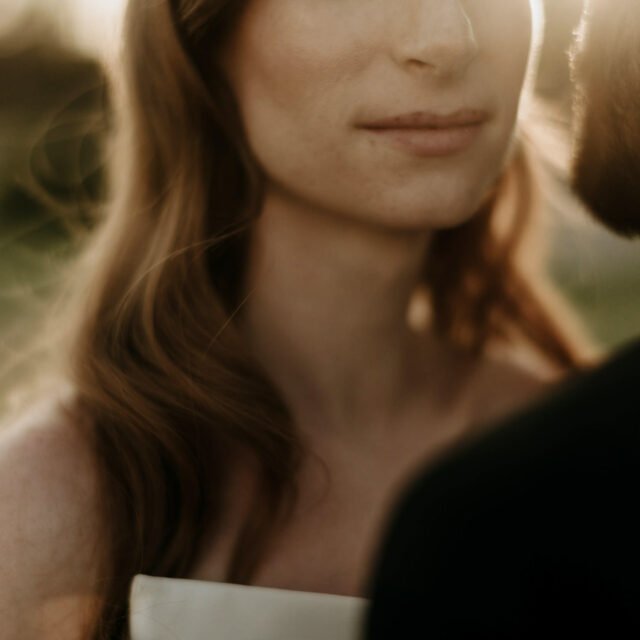

Before the ceremony, before the vows, before walking toward the altar, there is a moment that already belongs completely to the wedding.
The getting ready.
That intimate space where everything begins to feel real. Where the dress stops being a garment hanging on a wall and becomes a presence. Where hands tremble a little. Where someone adjusts a button, a sleeve, a veil, a piece of jewelry, or a flower. Where laughter appears to hide the nerves. Where family watches in silence, knowing that something important is about to change.
Getting ready photography is not only about documenting makeup, hair, the suit, shoes, or accessories.
It is about telling the emotional beginning of the story.
Many couples think of the wedding as starting with the ceremony or the reception. But the truth is that the day begins much earlier. It begins when the couple wakes up with a different feeling. When the room fills with movement. When the closest people arrive. When windows open, clothes are prepared, messages are heard, deep breaths are taken, and everything begins to take shape.
There is memory there.
And if it is not photographed with sensitivity, it can be lost forever.
What is the getting ready in a wedding?
The getting ready is the moment before the ceremony when the couple prepares to experience the wedding.
It can include makeup, hair, wardrobe, personal details, reading letters, time with family or friends, intimate toasts, previous portraits, reviewing accessories, and all those moments that happen before leaving for the ceremony.
For the bride, it is often associated with the dress, veil, shoes, jewelry, bouquet, makeup, and the company of her mother, sisters, bridesmaids, or close friends.
For the groom, it can include the suit, cufflinks, watch, shoes, tie, boutonniere, friends, parents, a drink before the ceremony, a letter, or a moment of silence before leaving.
But the getting ready should not be seen as a list of things.
It is an atmosphere.
It has a different rhythm from the rest of the day. There is no ceremony yet. There are no guests gathered yet. There is no party yet. There is expectation. There is preparation. There is an intimacy that rarely repeats itself with the same intensity during the wedding.
That is why it deserves to be photographed with intention.
The emotional beginning of the visual story
A good story does not begin at the climax.
It begins with signs.
In a wedding, those signs appear during the getting ready. The way the bride looks at her dress. The groom’s gesture as he puts on his jacket. The mother trying not to cry while helping with the final details. The friend who makes a comment to ease the nerves. The father who walks into the room and stays silent for a few seconds, not knowing what to say.
All of that tells something.
The ceremony shows the commitment. The party shows the celebration. But the getting ready shows the emotional transition toward that moment.
It is the before.
And the before has a very particular strength, because it still contains expectation. Something is still about to happen. The couple is preparing not only physically, but emotionally, to cross a threshold.
Getting ready photography allows that beautiful tension between the everyday and the unrepeatable to be preserved.
A hotel room, a family home, a hacienda, a villa, an urban apartment, or a room facing the sea can become a setting because that is where the story begins.
Details matter, but they are not everything
There are many important details during the getting ready.
The dress. The suit. The shoes. The rings. The perfume. The invitations. The bouquet. The jewelry. The watch. The written vows. The letters. The inherited accessories. The objects with family value.
These elements deserve to be photographed because they are part of the wedding’s visual memory. Many were chosen with care. Some have history. Others represent style, family, tradition, or personality.
But there is a common mistake: turning the getting ready only into a detail session.
Objects matter, yes.
But they matter more when they are connected to people.
A hanging dress can be beautiful. But the dress being buttoned by a mother carries another emotional weight. A watch can look elegant. But the gesture of a father helping place it can have a much deeper meaning. A bouquet can be perfectly designed. But the way the bride holds it for the first time says something no product-style photo can replace.
Getting ready photography must balance aesthetics and emotion.
Because details build context, but gestures build memory.
The intimacy before the ceremony
The getting ready has something the ceremony and reception do not always allow: closeness.
It is a smaller, more contained, more private moment. The couple is not yet in front of everyone. There is no large audience yet. Emotions appear in a less public way, sometimes more fragile, sometimes more truthful.
That space allows for very human photographs.
The bride breathing before putting on the dress. The groom adjusting his sleeve in front of the mirror. A grandmother watching from a chair. A sister making everyone laugh. A friend helping with the tie. A mother touching her daughter’s face before leaving.
These are not spectacular scenes in the obvious sense.
But they can be the most valuable ones.
Because they reveal the intimate dimension of the wedding. The part not all guests get to see. The part that belongs to close family, the most important friends, and the couple in their most vulnerable state.
A good wedding photographer understands that the getting ready should not be invaded. It should be accompanied.
The bride’s getting ready: emotion, beauty, and transition
The bride’s getting ready often carries a very strong symbolic weight.
It is not only about makeup or the dress. It is about an emotional transformation. The bride begins the day as herself in an everyday setting and little by little becomes the image she will remember for the rest of her life.
That process has beauty, but also tension.
There are nerves. There is expectation. There is care in the details. There are conversations that seem small, but may remain forever. There are moments when the bride looks in the mirror and suddenly understands that the wedding has already begun.
Photography should care for that transition.
Not everything should feel posed. Not everything should look like a fashion editorial. Elegant portraits can exist, of course, but there should also be space for the spontaneous: a laugh, a tear, a doubt, a silence.
The bride’s getting ready works best when it is photographed with sensitivity, not haste.
Because there are moments that need to breathe.
The groom’s getting ready: a part that should not be left out
For a long time, the groom’s getting ready was treated as something secondary.
That is a mistake.
The groom also goes through an emotional process before the ceremony. Maybe he expresses it in a different way. Maybe there are more jokes, more silence, more restraint, or more movement. But there are also nerves, expectation, and meaning.
Photographing the groom getting ready helps balance the story.
The suit, the watch, the shoes, the friends, the father, the brothers, a letter, a look in the mirror, a brief toast, or a moment alone before leaving can bring a lot to the narrative of the day.
Also, when both getting ready moments are documented, the visual story becomes more complete. The couple can later see how each one lived those previous hours, even while they were separated.
That has enormous emotional value.
Because while one was getting ready in one room, the other was also going through their own path toward the same moment.
The importance of the place where the getting ready happens
The getting ready space has a major influence on the photographs.
It does not have to be huge or luxurious, but it should have order, good light, and a certain calm. A crowded, dark room filled with bags, cables, clothes, and objects can make the visual result much more difficult.
Ideally, the space should be prepared so it can breathe.
A room with windows, natural light, clean walls, enough space to move, and a calm environment can make a great difference. In destination weddings, hotels, haciendas, or villas, it is worth choosing a room that speaks with the overall style of the wedding.
Some things that help:
• Having important objects nearby
• Keeping one area tidy for photographs
• Avoiding too many people in the room at the same time
• Considering the entrance of natural light
• Preparing the dress, suit, shoes, rings, and accessories
• Reserving enough time so nothing feels rushed
The getting ready does not need to be perfect.
But it does need to be cared for so emotion can appear without chaos.
How light changes getting ready photography
Light is essential in this moment.
During the getting ready, natural light can create soft, intimate, and elegant portraits. A well-placed window can be enough to build images with great depth. Side light can highlight the textures of the dress, facial gestures, hand details, and very delicate atmospheres.
But ideal conditions are not always available.
Some rooms have difficult artificial light. Others are small. Others have mirrors, reflections, strong colors, or very little sunlight. That is why the photography team must know how to adapt.
A well-photographed getting ready does not depend only on having a perfect room. It depends on understanding how to use what exists.
Light helps the moment feel intimate, not flat. Emotional, not cold. Elegant, not artificial.
And when it is handled well, it can turn a simple scene into a deeply memorable image.
Time: the most underestimated element
One of the greatest enemies of the getting ready is rushing.
When everything happens in a hurry, moments are lost. The couple becomes tense. The makeup team feels pressured. The family gets impatient. The photographer barely manages to document the basics. And what should have been an intimate beginning becomes a race against the clock.
That is why it is important to leave enough time.
Not only for makeup and wardrobe, but to breathe. To take portraits. To capture details. To live the moment without feeling like everything is falling apart.
The getting ready should not be planned as a simple task before the ceremony.
It should be planned as a real part of the wedding.
When there is a good timeline, images gain naturalness. The couple looks calmer. Gestures appear without pressure. Emotion has space.
And that shows.
Common mistakes when photographing or planning the getting ready
Some mistakes can greatly affect this moment:
• Leaving too little time before the ceremony
• Getting ready in a dark or messy room
• Having too many people entering and leaving
• Not setting aside important details in advance
• Not including the groom in the coverage
• Forcing too many poses when the moment calls for naturalness
• Not coordinating photography, video, makeup, and planning
• Leaving the dress, suit, or accessories in unphotogenic places
• Not considering transfers between the getting ready and the ceremony
The good news is that many of these mistakes can be avoided with planning.
A well-cared-for getting ready does not need to become rigid. It only needs intention, order, and time.
When the getting ready becomes family memory
Over the years, some getting ready photographs can acquire unexpected value.
The image of a mother helping with the dress. The father seeing his daughter ready for the first time. Friends laughing before leaving. A grandmother present in the room. A letter read in silence. A hand adjusting a detail.
At the moment, they may seem like small scenes.
Later, they can become enormous.
Because the wedding does not speak only about the couple’s love. It also speaks about the people who accompanied that day. About those who were close before everyone else saw the ceremony. About those who helped, supported, accompanied, and witnessed the intimate transformation of the beginning.
The getting ready is family memory in its purest form.
And that is why it deserves a gaze that takes it seriously.
Why Choose Us?
At AVMF, getting ready photography is understood as the first emotional chapter of the wedding.
It is not only about photographing objects, makeup, or wardrobe. It is about observing how the day begins to feel. How the people closest to the couple move. How emotion appears before the ceremony. How details, light, space, and bonds build a unique atmosphere.
The AVMF team works this moment with discretion, sensitivity, and real attention to the human side. The intention is to capture elegant images, yes, but also honest ones. Photographs that preserve the beauty of the beginning without interrupting its naturalness.
If you are planning your wedding and want the getting ready to become a living part of the visual story, AVMF will be honored to accompany that beginning.
Because a wedding does not start when someone walks to the altar.
It starts much earlier, in that intimate moment where everything begins to become real.