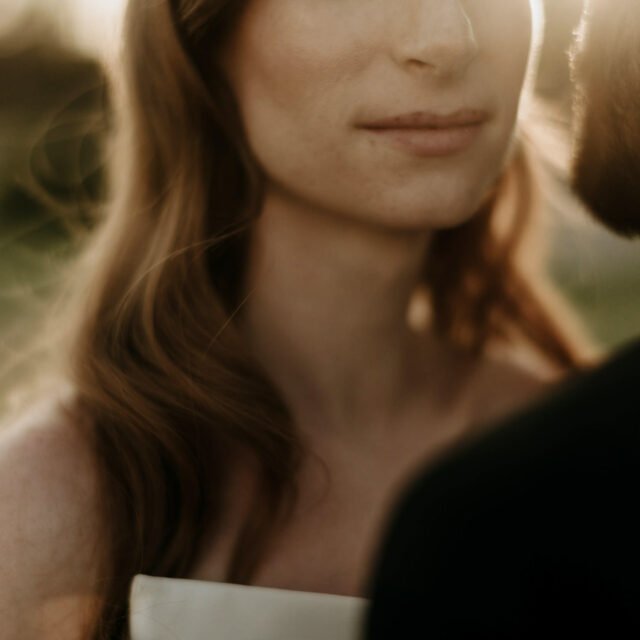

For years, many weddings were built around an almost military schedule.
Getting ready. Transportation. Ceremony. Family photographs. Couple session. Cocktail hour. Entrance. Dinner. Speeches. First dance. Cake. Party.
Everything perfectly placed on a timeline.
And everything happening far too quickly.
Slow weddings begin with a different idea: a wedding should not feel like a checklist the couple has to complete.
It should feel like a day they actually had time to live.
The trend connects with a broader movement toward more intentional celebrations, less rigid experiences, multi-day gatherings, and weddings where connection with guests matters just as much as visual production.
A slow wedding is not necessarily small.
It does not have to be simple.
And it certainly does not mean a wedding without production.
It can be a sophisticated celebration with distinctive design, extraordinary gastronomy, and hundreds of guests.
What changes is the rhythm.
What is a slow wedding, really?
The concept borrows from other “slow” movements: consuming, traveling, or living with greater intention, without measuring the experience only by how many things can fit into it.
Applied to a wedding, it means creating space.
Space to talk with the people who traveled to be there.
To finish getting ready without checking the clock every three minutes.
To enjoy dinner.
To walk.
To embrace someone without immediately hearing, “We have to go.”
To allow a spontaneous moment to last longer than twenty seconds.
The key word is intention.
A slow wedding does not eliminate things simply for the sake of doing less.
It removes what is taking up time without adding something meaningful.
Fewer activities can create a richer experience
There is a strange kind of pressure surrounding weddings.
It can feel as though something always needs to be added.
Another activity. Another entrance. A surprise. An outfit change. Another photo session. Another activation. Another food station. Another moment designed for social media.
And when everything is special, nothing has enough time to truly become special.
A slow wedding may include fewer programmed moments while allowing each one to be experienced more fully.
Dinner can last long enough for real conversation.
The ceremony can breathe.
Cocktail hour can actually become a moment to reconnect with guests.
The party can begin when people genuinely feel like dancing, rather than simply because the schedule says it is time.
This also changes the meaning of luxury.
Luxury stops being only about how much there is and begins to be about how much time exists to enjoy it.
An extraordinary table makes more sense when guests have time to sit around it.
A carefully designed menu deserves time.
A spectacular view deserves a few minutes without someone announcing the next item on the itinerary.
A slow wedding does not mean an improvised wedding
There is an important distinction here.
For a wedding to feel relaxed, there is usually a great deal of planning behind it.
Free time also needs to be designed.
Realistic transportation times, transitions between activities, ceremony length, distances within the venue, kitchen timing, setup, sunset, and vendor needs all have to be considered.
What should be avoided is filling every margin artificially.
Good planning allows small delays to happen without turning into a crisis.
If hair and makeup finish fifteen minutes late, the photo session does not disappear.
If the ceremony runs longer because someone says something deeply emotional, nobody has to look at the clock in panic.
If the couple decides to spend a few extra minutes talking with their grandparents, the wedding can absorb it.
That is one of the great benefits of slowing down.
The celebration becomes less fragile.
Photography changes when there is time
For photography and video, this philosophy can completely transform the way a wedding is told.
Natural images require something that is often overlooked:
Time for something to happen.
A conversation needs a few minutes.
A portrait needs the couple to stop thinking about the next activity.
A family needs time to gather without feeling that they are delaying everything.
Even silence can become an important photograph.
A slow wedding creates especially fertile ground for this kind of photography.
Not because the photographer does less.
But because there is more real life happening in front of the camera.
And video can tell much more than the official moments
In a documentary wedding film, the moments in between can be just as valuable as the major events.
The sound of a conversation during the getting ready.
Guests arriving.
The couple walking slowly toward dinner after the ceremony.
An unexpected comment.
A laugh that continues after everyone thinks the shot is over.
The atmosphere around a long table.
The sound of the venue as night falls.
These scenes create context.
A wedding film stops being only a compilation of the ceremony, first look, first dance, and party.
It begins to show what it actually felt like to be there.
When the schedule has room to breathe, photography and video can preserve the transitions.
And transitions are often where the things no one planned begin to happen.
Slow weddings and wedding weekends: a natural combination
The slow philosophy finds one of its best settings in destination weddings.
If family and friends have already traveled hundreds or thousands of miles, it may make sense not to compress all of that time together into eight or ten hours.
That is why the concept works so naturally with a wedding weekend.
A welcome gathering the night before allows everyone to reconnect.
The main wedding day can begin more calmly.
A brunch the following morning creates a natural ending.
Mexico is especially well suited for this.
Oaxaca can become gastronomy, walks, mezcal, and architecture.
Baja California can unfold around vineyards, long tables, and landscape.
A coastal wedding can begin with dinner by the sea and end two days later with a relaxed breakfast.
The destination stops being simply the place where the ceremony happens.
It becomes shared time.
How do you know if a slow wedding is right for you?
It may make a great deal of sense if, when imagining your wedding, you think more about how you want to feel than how many activities you want to include.
If you want time to talk with your guests.
If you are worried the day will pass too quickly.
If you value documentary photography and spontaneous emotion.
If you truly want to enjoy the food and the venue you chose.
If you prefer a fluid experience over a constant succession of formalities.
It can also work beautifully for couples who do not enjoy feeling overly observed.
When there is more time, photography does not need to rely on long sessions. Smaller moments can be created throughout the day while the rest of the story unfolds naturally.
Slow does not mean boring.
A wedding can still end with a completely wild dance floor.
The difference is that nobody had to rush to get there.
Celebrating more slowly can also mean remembering more deeply
There is a common contradiction in weddings.
Months, sometimes more than a year, are spent preparing an event that later seems to last only a few minutes.
“It went by so fast” is probably one of the most common things couples say after their wedding.
We cannot stop time.
But we can stop compressing it unnecessarily.
That is exactly what slow weddings propose.
Not doing less out of obligation.
Creating room to feel more.
Allowing a meal to actually be a meal. Letting a conversation finish. Allowing a photograph to happen without rushing it. Giving the couple a chance to look around and understand where they are before someone announces what comes next.
Perhaps that is one of the most contemporary ways to understand luxury.
Having enough time to be present.
Why Choose Us?
At AVMF, we believe the strongest visual stories do not happen only during scheduled moments.
Very often, they happen in between.
A glance while everyone is moving from one place to another. A conversation after the ceremony. One hand searching for another beneath the table. A laugh that begins when nobody was prepared to photograph it.
Slow weddings allow those moments enough space to exist.
AVMF approaches photography and video through an editorial, documentary, and deeply human perspective. The team works alongside planners, venues, and vendors to understand the rhythm of each celebration and accompany it without turning the day into a constant production.
If you are imagining a wedding in Mexico where you can truly enjoy your guests, the setting, and every part of the experience, AVMF will be honored to tell that story.
Because a wedding should not feel like something you managed to finish.
It should feel like something you had time to live.