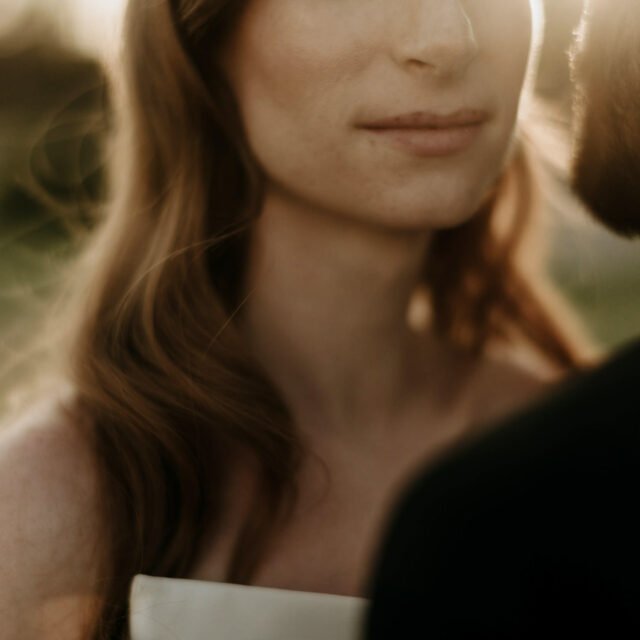

The couple is about to enter the ceremony.
The music begins. The guests stand. The first tears appear. Everything is ready for one of the most important moments of the day.
But just as the bride begins to walk down the aisle, several arms rise at once. Phones, tablets, and glowing screens appear. Some guests lean into the aisle to record. Others try to get the best photo without realizing they are blocking the view.
The entrance is still emotional.
But visually, something changes.
An unplugged wedding proposes a simple idea: asking guests to put away their phones and cameras during the ceremony so they can be fully present and so the professional team can document the moment without obstacles.
It does not mean banning photographs throughout the entire wedding.
It does not mean controlling the guests.
It means protecting, for a few minutes, one of the most intimate, symbolic, and impossible-to-repeat moments of the entire celebration.
What is an unplugged wedding?
An unplugged wedding, also known as a phone-free wedding, is a celebration where guests are asked not to use phones, personal cameras, or other devices during specific moments.
Most couples apply this request only during the ceremony.
Afterward, during cocktail hour, dinner, or the party, guests can take photographs, record videos, and share content as usual.
Some couples prefer a completely unplugged wedding, but that is less common. In practice, the most effective approach is usually to establish a clear and reasonable boundary: during the ceremony, everyone puts their phone away.
The intention is not to prevent guests from keeping their own memories.
The couple will already have professional photography and video. The idea is to allow everyone present to experience the moment directly, instead of seeing it through a screen.
Why phones can affect ceremony photographs
Phones may be small, but visually they can take up too much space.
A bright screen in the middle of an image can become completely distracting. An extended arm can hide the couple’s expression. A person leaning into the aisle can block an entrance that will never happen again.
These problems appear especially during moments such as:
• The couple’s entrance
• Family reactions
• The exchange of vows
• The ring exchange
• The first kiss
• The ceremony exit
The photographer can change position, search for another angle, or wait a few seconds. But some scenes happen only once.
If a guest blocks the first kiss with a phone, there is no real second opportunity. It can be repeated for the camera, but it will no longer carry the same emotion or spontaneity.
A phone-free ceremony allows photographs to show faces, glances, and reactions instead of screens.
That difference can still be felt many years later.
More present guests, more emotional photographs
The greatest benefit of an unplugged wedding is not technical.
It is human.
When guests are not worried about recording, framing, focusing, or posting, their attention changes. They watch the couple. They listen to the vows. They smile. They become emotional. They react.
That also improves the photographs.
The background of a ceremony is part of the story. The parents’ expressions, friends laughing, grandparents watching, or someone wiping away a tear can turn a beautiful image into a deeply meaningful photograph.
When everyone has a phone in front of their face, those reactions disappear.
The photographs end up showing devices instead of people.
An unplugged wedding does not only help the photographer work better. It helps guests become part of the scene again.
A more intimate and less distracted ceremony
Some moments lose their strength when they are lived through too many interruptions.
A notification. A ringtone. Someone stepping into the aisle to take a picture. A guest standing up to record from another angle. A glowing screen during the vows.
Each interruption may seem small, but it can break the atmosphere.
The ceremony is one of the few moments during the wedding when everyone should share the same focus. It is the moment when the couple expresses their commitment in front of the most important people in their lives.
Asking guests to keep their phones away helps create a more intimate atmosphere.
The space feels calmer. Emotion moves with less noise. The couple can look at their guests and see faces instead of cameras.
Many times, that feeling becomes more valuable than any photograph taken from the third row.
How to request a phone-free ceremony without making guests uncomfortable
The key is to communicate the request clearly and kindly.
A small sign at the entrance is not always enough. Some guests will not notice it, will not read it, or may assume the request does not apply to them.
The most effective approach is to combine several methods.
Include it in the invitation or wedding website
It can be explained in advance with a short message:
“We would love to share this moment with you while everyone is fully present. We kindly ask that you put away your phones during the ceremony. Our photography and video team will take care of preserving every moment.”
Place visible signage
A sign near the entrance can serve as a reminder. It should be easy to read and positioned where everyone will see it before taking their seats.
Ask the officiant to make an announcement
This is usually the most important step.
Before the ceremony begins, the officiant can ask guests to put away their devices and remind them that the couple would love to see their faces during the ceremony.
When the request is announced aloud, there is less confusion.
Designate someone to help
A coordinator, wedding planner, or trusted person can kindly remind guests if someone continues using a phone.
The instruction should not feel aggressive.
It should feel like an invitation to be present.
What about guests who want to take photographs?
There may always be exceptions.
Perhaps a grandparent wants to keep a personal image. Maybe a family member could not attend and someone wants to send them a video. Some guests may also genuinely enjoy documenting important moments.
There is no need to turn the ceremony into a conflict.
One option is to allow a brief photo moment before the ceremony begins. The officiant can announce that everyone has a few seconds to take a picture before putting their devices away.
Another possibility is to share the professional gallery with family and friends once it is ready.
It can also be made clear that the restriction applies only during the ceremony, not throughout the entire celebration.
When the rules are reasonable and communicated properly, most guests understand.
Does an unplugged wedding guarantee better photographs?
It helps significantly, but it is not the only factor.
The quality of the photographs also depends on the light, the venue, the time available, the team’s experience, and the overall coordination of the ceremony.
However, removing personal phones and cameras from the aisle reduces one of the most common and preventable problems.
It allows the photographer to find cleaner angles. It makes it easier to capture guest reactions. It avoids glowing screens and raised arms. It reduces unexpected movement during important scenes.
It also helps video look more polished, especially during entrances, vows, and the first kiss.
The goal is not to create perfect images at the expense of the experience.
The goal is to protect the experience so the images can reflect it more honestly.
It is not about banning phones, but about trust
Some couples hesitate because they are afraid of seeming demanding.
But asking for a phone-free ceremony is not impolite.
It is a way of saying:
“This moment matters to us. We want to experience it with you.”
Guests were invited because they are part of the couple’s story, not because dozens of additional cameras are needed.
The professional team will be responsible for documenting the day. The guests will have the opportunity to live it.
That division can be freeing for everyone.
No one has to worry about getting the best shot. No one has to check the storage on their phone. No one needs to post before the ceremony is over.
They only have to be there.
Why Choose Us?
At AVMF, wedding photography and video are understood as a way to preserve not only what happened, but also how it felt.
A phone-free ceremony offers greater visual freedom, but it also creates something more important: an atmosphere where the couple and their guests can share the moment authentically.
The team observes the reactions, light, gestures, and relationships that appear throughout the ceremony. The intention is to document without interrupting, following the emotion and respecting the natural rhythm of the day.
AVMF works alongside planners, venues, and vendors to care for the complete experience and anticipate the details that can influence photography and video.
If you are planning an unplugged wedding and want your ceremony documented with sensitivity, elegance, and a deeply human perspective, AVMF will be honored to accompany your story.
Because a screen can save an image.
But being present preserves something far more important.